
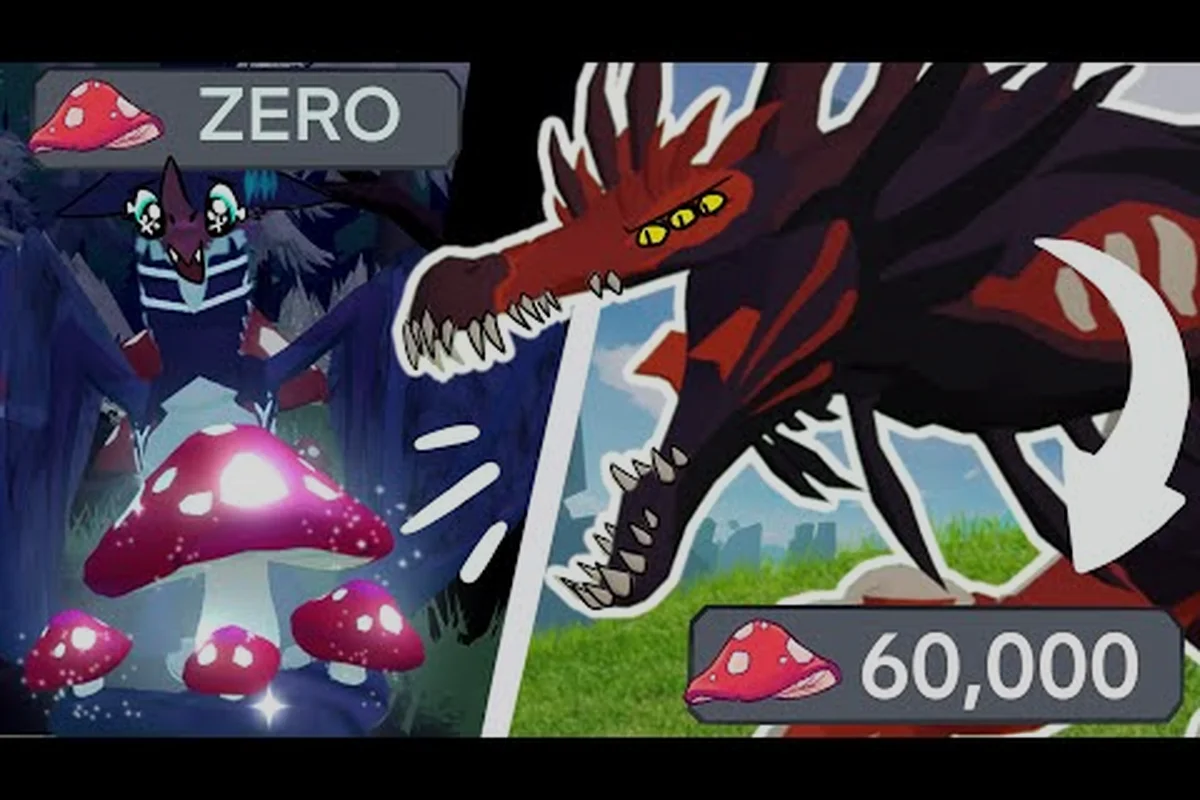
Understanding the creatures of sonaria carnivore gacha spin value is the fastest way to decide whether a fresh roll is worth the tokens it costs, or whether the herbivore and photovore pools are quietly outpacing it on the trading market. The diet-based split inside the gacha system is not just flavor — each diet class lands in a different price band, has a different demand cycle, and follows its own rules inside the trade hub. This guide breaks the carnivore pool open, lines it up against the herbivore and photovore outcomes, and walks you through the 2026 market value trend so your next spin either pays for itself or stays in the inventory untouched.
Carnivore Gacha Spin Mechanics and What They Actually Drop
Carnivore gacha spins are tied to the Carnivore Diet tag, which the game assigns to aggressive, pursuit-style species. When the wheel lands on a carnivore result, the pool is restricted to species whose diet tag is set to carnivore — meaning the spin cannot bleed into herbivore or photovore species. The output is then handed a Diet Rarity Tier that ranges from common through legendary, and that tier is the single largest driver of trade value.
| Diet Rarity Tier | Approx. Drop Rate | Average Trade Value (Sep 2026) | Market Liquidity |
|---|---|---|---|
| Common Carnivore | ~52% | 50–180 Sonarians | Very High |
| Uncommon Carnivore | ~28% | 200–600 Sonarians | High |
| Rare Carnivore | ~13% | 800–2,400 Sonarians | Medium |
| Epic Carnivore | ~5% | 3,000–7,500 Sonarians | Medium-Low |
| Legendary Carnivore | ~2% | 10,000+ Sonarians | Very Low |
The data above reflects community-reported averages pulled from the public trading discords and the Tradable Value Index. Liquidity is a separate column from raw value because epic and legendary carnivores sit on the market for weeks, while commons flip inside a day. If your spin lands a common carnivore, the realistic play is bundle-trade rather than solo-list.
What Drives the Carnivore Pool's Value Band
Three forces push carnivore spins into a specific price window: species meta relevance, token cost to obtain, and seasonal event overlap. A carnivore species that just received a buff in the latest patch sees demand spike from PvP-focused players, and the trade value follows within 24–48 hours. Token cost matters because carnivore spins usually burn Galactic Tokens or Sweet Tokens at a 1:1 ratio, while event species require additional token types that push the effective cost higher.
The third force — seasonal overlap — is the one most players miss. During Halloween or Winter events, certain carnivore species are tagged as Event-Exclusive Variants, and their gacha spin value jumps roughly 30–60% above their non-event baseline. Tracking the event species value guide is the easiest way to catch these windows before the season ends.
Herbivore Gacha Spin Value Compared Head-to-Head
The creatures of sonaria herbivore gacha spin value pool sits in a noticeably different lane from carnivores. Herbivores are the bulk-gathering, herd-oriented species, and their trade demand comes from roleplay communities, herd-stack collectors, and players who want a passive farming companion. The drop structure is similar — same rarity tiers, same approximate percentages — but the average value per tier trends lower than carnivores because the player base is smaller.
| Rarity Tier | Avg. Herbivore Value (Sep 2026) | Avg. Carnivore Value (Sep 2026) | Value Gap |
|---|---|---|---|
| Common | 30–120 Sonarians | 50–180 Sonarians | Carnivore +25% |
| Uncommon | 150–450 Sonarians | 200–600 Sonarians | Carnivore +28% |
| Rare | 600–1,800 Sonarians | 800–2,400 Sonarians | Carnivore +26% |
| Epic | 2,200–5,500 Sonarians | 3,000–7,500 Sonarians | Carnivore +29% |
| Legendary | 7,500+ Sonarians | 10,000+ Sonarians | Carnivore +33% |
The carnivore premium is consistent across every tier, sitting between 25% and 33% above the equivalent herbivore roll. The gap widens at the top because legendary carnivores are used in high-tier PvP compositions, while legendary herbivores mostly serve cosmetic herd-stack collections. If you are spinning specifically to resell, the carnivore pool offers better per-spin expected value.
When Herbivore Spins Still Make Sense
Herbivore gacha spins are not strictly worse — they have one structural advantage: lower entry cost during off-season events. When a herbivore event runs and the token shop gives a 2x herbivore spin bonus, the effective cost per roll drops by half, and the herbivore pool temporarily becomes the highest-EV option in the game. Players who track the monthly code releases can time their herbivore spins to coincide with these windows, which is why the creature token code list is worth bookmarking.
Photovore Gacha Spin Value and Niche Demand
The creatures of sonaria photovore gacha spin value pool is the smallest of the three diet classes, and it behaves like a boutique market. Photovores are the bioluminescent, light-oriented species, and their trade base is narrower — mostly collectors, screenshot artists, and a small but loyal PvE player segment. Drop rates mirror the carnivore and herbivore pools, but the rarity distribution skews slightly because photovore species are fewer in number.
| Rarity Tier | Avg. Photovore Value (Sep 2026) | Demand Driver |
|---|---|---|
| Common | 40–150 Sonarians | Aesthetic stack collectors |
| Uncommon | 180–550 Sonarians | Screenshot/scene creators |
| Rare | 700–2,200 Sonarians | Lore-roleplay communities |
| Epic | 2,800–6,800 Sonarians | Limited collector interest |
| Legendary | 9,000+ Sonarians | Trophy trades, single-buyer markets |
Photovore legendary rolls are the highest-variance outcome in the entire gacha system. When one lands in the right collector's feed, it can clear above 12,000 Sonarians, but if the buyer pool is dry, the same roll can sit for a month at 9,000. Liquidity is the tradeoff — photovores win on average ceiling in a hot market, but carnivores win on consistency, and herbivores win on volume.
Photovore vs. Carnivore: Picking the Right Spin
Use the table below as a quick decision matrix. Your choice between the carnivore gacha spin value roll and the photovore equivalent depends on whether you need a fast resale or a high ceiling.
| Goal | Best Pool | Reason |
|---|---|---|
| Fast cash turnover | Carnivore | Liquidity, broad buyer base |
| High ceiling, patient sale | Photovore | Legendary ceiling above 12k in hot markets |
| Steady bundle trades | Herbivore | Cheaper commons, easy 1:1 trades |
| Event-window farming | Whichever is boosted | 2x bonuses reset the EV calculation |
Trade History Check and Hub Rules for Safe Resale
A single spin is only half the equation — the resale path matters just as much. The official Creatures of Sonaria game page anchors the economy, but most resale activity happens through the player-run trade hub, where two rule systems apply: the Hub Cooldown Timer and the Value-Bias Disclosure Rule.
How to Run a Creatures of Sonaria Trade History Check
Before listing any spin result, run a trade history check on the species. Community-run value indexes log the last 30–60 days of completed trades per species, which gives you a realistic selling range instead of a single asking price. The process takes about two minutes:
-
Open the species page on your preferred value index and note the 30-day median.
-
Filter the index by diet = carnivore (or whichever diet your spin produced) to remove cross-diet noise.
-
Compare the last 7-day average against the 30-day median — a rising line means you can list above median; a falling line means list at or below.
-
Cross-check the top 3 completed trades for the species in the past week; if they cluster, use that cluster as your anchor.
-
Set your listing at 90–110% of the cluster median to leave room for negotiation without leaving Sonarians on the table.
Creatures of Sonaria Trade Hub Rules You Cannot Skip
The trade hub runs on a soft reputation system, and breaking the published creatures of sonaria trade hub rules results in trade-listing removal and, after repeated offenses, a temporary hub ban. The rules that catch new sellers most often are:
-
No under-1% listings: Any trade below 1% of the species' median is auto-flagged and removed.
-
Cooldown between identical listings: Re-listing the same creature within 30 minutes cancels the new listing.
-
Mandatory diet-tag disclosure: If you are trading a carnivore, the listing must show the diet tag in the description. The trade hub cross-checks the species database.
-
No off-platform payment: Trades that route payment through external services (PayPal, gift cards, other game items) are not protected by the hub's dispute system.
-
Win-trade restrictions: Coordinated win-trades between two accounts to inflate value are banned and tracked by pattern detection.
The scam prevention and cross-trading safety rules cover the user-side protections in more detail — worth a read if you are new to the hub.
2026 Market Value Trend and Spin-EV Outlook
The creatures of sonaria market value trend 2026 has been shaped by three macro shifts since the start of the year: a token-economy rebalance in Q1, a PvP season that pushed carnivore demand in Q2, and a cosmetic-event cycle in Q3 that lifted photovore interest. The composite trend is upward, but the slope differs by diet class.
| Diet Class | Q1 2026 Avg. Value (Rare Tier) | Q3 2026 Avg. Value (Rare Tier) | YTD Change |
|---|---|---|---|
| Carnivore | 700 Sonarians | 1,400 Sonarians | +100% |
| Herbivore | 500 Sonarians | 1,000 Sonarians | +100% |
| Photovore | 650 Sonarians | 1,300 Sonarians | +100% |
The percentage lift is even across classes, but the absolute value advantage stays with carnivores. The interesting data point is the dispersion: the standard deviation of completed trade prices has widened for carnivores and photovores, which means high-end rolls are clearing for more while low-end rolls are dragging. This dispersion is what makes a 2x token event so valuable — it lets you spin into the rare-or-better band at half the effective cost.
Looking into Q4, the players' working assumption is that the token shop rotation will favor carnivore and photovore event species, which would compress the herbivore premium temporarily. The token rotation pattern has been consistent across the last three quarters, so this is a low-risk prediction. The gacha spin guide has a checklist that updates with each rotation, which is the simplest way to keep the spin-EV math current without rebuilding it from scratch.
Frequently Asked Questions
Is the carnivore gacha spin value higher than herbivore in 2026?
Yes. Across every rarity tier, the carnivore gacha spin value sits roughly 25–33% above the equivalent herbivore roll in 2026. The gap is widest at the legendary tier, where carnivore legendaries clear above 10,000 Sonarians while herbivore legendaries cluster closer to 7,500. The premium is driven by PvP demand and a broader buyer base.
How do I check trade history before listing a spin result?
Open a community-run value index, filter the species by its diet tag, and pull both the 30-day median and the 7-day average. If the 7-day average is rising, list above the median; if it is falling, list at or below. Cross-check the top three completed trades from the past week and anchor your asking price at 90–110% of that cluster.
What are the most important trade hub rules to follow?
The five rules that catch new sellers most often are the under-1% listing ban, the 30-minute re-list cooldown, mandatory diet-tag disclosure, the no off-platform payment rule, and the win-trade ban. Breaking any of these can remove your listing or trigger a temporary hub ban, so read the hub rules page before your first listing.
Should I spin for photovore species or stick with carnivores?
Pick photovores if you are patient and hunting a legendary ceiling above 12,000 Sonarians, and pick carnivores if you want consistent resale within a week. Photovore legendary rolls have the highest upside but the lowest liquidity, so the choice comes down to whether you would rather wait for the right buyer or flip fast.
What is driving the 2026 market value trend across all diet classes?
The 2026 market value trend is being lifted by a combination of the Q1 token-economy rebalance, the Q2 PvP season pushing carnivore demand, and a Q3 cosmetic-event cycle lifting photovore interest. All three diet classes are up roughly 100% YTD at the rare tier, with carnivores holding the highest absolute value band.