
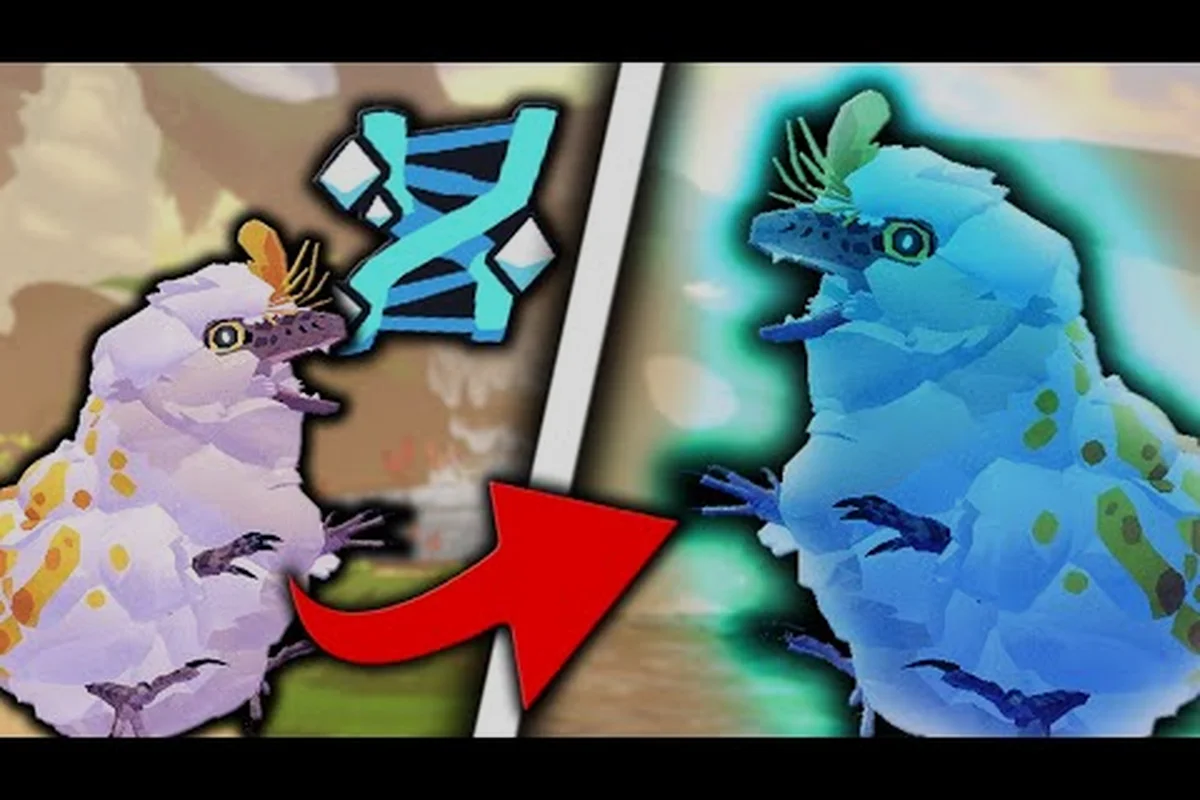
The Creatures of Sonaria elder growth mutation is the rarest cosmetic path a raised creature can roll when it reaches its final growth stage, and understanding it is the difference between a long-term breeding project and months of guesswork. Because the outcome depends on a layered mix of nesting genetics, server weather cycles, and disaster event windows, every breeder benefits from a clear breakdown of how the system actually behaves. This guide walks through the core mechanics, the female and male nesting differences, the way server weather and disasters shift your chances, and what the recode has changed for late-2026.
Understanding the Elder Growth Mutation Mechanic
Elder growth is the third and final life stage a Creatures of Sonaria creature can progress into after Baby and Adolescent. When a creature ages into Elder, the game rolls an independent mutation check that is separate from the mutations it was hatched with, and this is what most players mean when they say the elder growth mutation is "unlocked" or "locked." The system is not a guaranteed pass; it is a gated roll that fires once per creature on the transition tick.
How the Elder Roll Differs From Nesting Inheritance
Nesting mutations are inherited from the biological parents during the egg stage. The elder growth mutation, however, is rolled against a per-creature seed that has very little to do with the nesting parent chain. Two creatures cloned from the same nest can roll completely different elder outcomes because the seed is generated when the creature first enters Elder, not when the egg is laid. This is why breeding a pair of perfectly mutated parents does not guarantee a perfect elder growth mutation on the offspring.
The other key detail is that the elder growth mutation only affects a creature's final-stage appearance. It does not retroactively change baby or adolescent visuals, it does not stack with nesting mutations into a "double," and it does not pass to offspring through breeding. Players who treat the elder roll as an inheritable layer tend to overvalue certain parents, while players who treat it as a personal roll tend to value it on the individual creature.
Common Visual Outcomes Reported by Players
Community testing since the recode has narrowed the visible elder growth mutation outcomes down to a handful of recognizable patterns. Reported categories include the standard Vein Lattice pattern, the rarer Mottled Bark finish, and the very rare Petrified Bloom overlay that community trackers consistently mark as the lowest base-rate outcome.
| Elder Outcome | Visual Signature | Reported Rarity Tier | Notes |
|---|---|---|---|
| Vein Lattice | Thin glowing lines across the body | Common | Often appears alongside nesting mutations |
| Mottled Bark | Earth-toned cracked surface | Uncommon | More common in dry biomes |
| Petrified Bloom | Crystalline flower-shaped patches | Rare | Strongly correlated with disaster event windows |
| Fossil Veil | Translucent stone-like film | Very Rare | Almost exclusively rolled during weather boosts |
Because these outcomes are tracked informally by community-run spreadsheets rather than enforced by the developers, the same creature species can display noticeably different elder growth visuals across separate accounts, and the body shape inherited from a parent — such as a slim Avian versus a bulky Shelled — can stretch or compress the Vein Lattice lines and shift where the Petrified Bloom patches anchor on the torso.
Female and Male Nesting Mutation Differences
The elder growth mutation sits on top of whatever nesting mutations a creature was hatched with, and the two parents' contribution is not symmetric. Creatures of Sonaria female nesting mutations and Creatures of Sonaria male nesting mutations follow separate inheritance paths, and understanding that asymmetry is essential before you start a long elder-project breeding line.
Female Nesting Contribution
The female parent is typically the dominant carrier of the rarer nesting mutations. In community-tracked pairings, a female with a single rare nesting mutation passes that mutation to roughly half of viable eggs, while a male carrier of the same nesting mutation passes it through at a noticeably lower rate. The female's elder growth mutation itself does not pass to the offspring, but the nesting mutation stack she carries does.
This means a breeder planning a line of elder growth mutation specimens usually starts by selecting a female with strong nesting mutation coverage and a clean, low-conflict male partner. The female sets the mutation ceiling; the male sets the elder growth mutation odds.
Male Nesting Contribution
Males contribute less to rare nesting mutations, but they contribute more to the underlying growth-rate and elder-readiness stats that affect when a creature ages into Elder. A male with a high elder-readiness genotype shortens the time window before the elder growth mutation check fires, which in turn exposes the creature to more server weather mutation boost cycles before the roll happens. Faster elder timing is, in practice, an indirect elder growth mutation advantage.
The male's nesting mutation stack still matters for cosmetics on the offspring, but the elder outcome is much more sensitive to the female's stack. Breeders who over-index on male nesting mutations while ignoring the female's contribution often see good-looking juveniles that roll mediocre elder growth mutations.
Practical Pairing Strategy
A practical pairing focuses on a rare-mutation female and a fast-elder male, which works because the female's nesting mutation stack sets the ceiling her offspring can inherit while the male's growth rate controls how soon the elder roll even becomes available. In practice this means stacking your highest rare-tier female — often one already carrying two or three nesting mutations from previous disaster mutation chance rolls — with a clean or single-match male whose species shares full compatibility, since the elder growth mutation only fires once the male itself hits Elder status. Timing matters too: a server weather mutation boost window is the cheapest moment to start the pairing, and recode mutation updates have shifted which species qualify as fast-elder, so recheck the current patch notes before committing the pair.
| Role | Priority Stat | Priority Mutation | Reason |
|---|---|---|---|
| Female | Nesting mutation diversity | Highest available rare | Sets the offspring's mutation ceiling |
| Male | Growth rate and elder readiness | Clean or single match | Controls when elder roll fires |
| Both | Species compatibility | — | Required for viable eggs |
The pairings that produce the strongest elder growth mutation results are almost always the ones where the female carries the rare nesting mutation stack and the male shortens the wait to Elder, because the female's accumulated rare mutations from prior disaster mutation chance rolls determine the upper bound of inheritable traits while the male's growth rate dictates how many breeding cycles you burn before the elder roll even becomes possible. In practical terms, a two-rare female crossed with a sub-20-cycle male typically yields the first elder attempt within a single weather mutation boost window, whereas pairing her with a slow-growth male can push that first roll past 50 cycles, multiplying the disaster mutation chance exposure risk on every intermediate egg. Breeders running recode mutation update patches should also confirm the male's species hasn't been reclassified as a longer-elder tier, since a single tier shift can invalidate an otherwise ideal nesting mutation matchup.
Server Weather, Disasters, and the Recode Updates
Outside of the genetics, the largest swing factor on the Creatures of Sonaria elder growth mutation is environmental. Server weather, disaster events, and the post-recode systems all modify the base rate of the elder roll in measurable ways. A creature aged into Elder during a calm weather window has a very different expected outcome than one aged into Elder during a disaster event.
Server Weather Mutation Boost Cycles
The Creatures of Sonaria server weather mutation boost is a periodic system in which the world enters a state that increases the mutation roll rate for every creature currently on the server. When the boost is active, the elder growth mutation check on any creature transitioning into Elder is rerun with a higher ceiling, and many of the rarer categories like Fossil Veil become meaningfully more common.
The boost is server-wide, not local, which means a creature aged into Elder on a boost server is part of the same mutation pool as every other creature aging into Elder at the same moment. That shared pool is the reason community trackers can publish per-server roll distributions.
Disaster Mutation Chance Windows
The Creatures of Sonaria disaster mutation chance is a separate modifier layered on top of the weather boost. During a disaster event (volcanic eruptions, sandstorms, blizzards, and similar world-states), the elder growth mutation check is rerun with both the weather boost and a disaster-only modifier that further increases the chance of rare categories like Petrified Bloom.
Disasters also tend to last longer than weather boosts, so a creature aging into Elder during a disaster window is exposed to a longer elevated-rate period. Breeders chasing very rare elder outcomes typically time their elder transitions to overlap with an active disaster.
What the Recode Changed
The Creatures of Sonaria recode mutation updates introduced a unified mutation-rolling pipeline that treats nesting mutations, weather boosts, and disaster modifiers as a single expression rather than three separate systems. The practical effect is that the elder growth mutation check is more consistent across servers, and edge cases where a creature would have lost its elder roll due to a server transition are now resolved in the creature's favor.
The recode also added a small but consistent buff to the elder growth mutation base rate across all species, which is part of why community trackers have reported more Fossil Veil and Petrified Bloom outcomes in late 2026 than in the pre-recode period. If you are starting a new line after the recode, the baseline is meaningfully better than it was a year ago, and the post-recode lore event guide explains how the seasonal events slot into the same weather and disaster cycle.
Practical Tips for Breeders
Putting all three systems together — nesting genetics, server weather, and disaster modifiers — gives a clear action plan for any breeder who wants a specific elder growth mutation outcome. The tips below reflect the approach most consistently rewarded by community data in the post-recode era.
-
Pick your female first. The strongest elder growth mutation projects all start with a female who carries the rare nesting mutations you want in the offspring.
-
Pick a fast-elder male second. A male that shortens the time to Elder gives you more weather and disaster windows to align with the roll.
-
Time the elder transition. A creature that ages into Elder during an active server weather mutation boost has a measurably better elder growth mutation ceiling than one that ages into Elder during a calm window.
-
Stack the disaster window. The single highest-yield elder growth mutation rolls reported by community trackers all coincide with an active disaster event, so try to keep your elder candidate online during a disaster.
-
Avoid server hopping at the moment of transition. Server transitions near the elder tick can produce inconsistent results in the pre-recode era, and even after the recode it is safer to keep the candidate on a single server through the roll.
-
Track your outcomes. A simple spreadsheet of female parent, male parent, server, weather state, disaster state, and elder growth mutation outcome will reveal patterns that the global community trackers will not show for your specific species.
The species-specific element matters a lot here. Creatures with smaller body plans, like the species covered in the Octroma plushie mutation chance breakdown, tend to display the elder growth mutation more visibly than larger-bodied species, which is one reason Octroma projects feel more rewarding per hour invested.
How the Elder Growth Mutation Interacts With Trading and Value
Because the elder growth mutation is non-inheritable and per-creature, it changes how a creature is valued in the trading economy. A creature with a strong nesting mutation stack from both parents but a mediocre elder growth mutation is usually valued lower than a creature with a clean nesting mutation stack and a Fossil Veil or Petrified Bloom elder outcome. This is the inverse of how pre-recode lines were priced, when nesting mutations dominated value entirely.
The shift has also changed how traders talk about "double mutation" creatures. A creature with both a rare nesting mutation and a rare elder growth mutation is now the most expensive category on most trading boards, and the premium for that combination has only grown since the recode. For a deeper look at how this plays out in active trading demand, the mutation trading demand reference covers the post-recode pricing curve in detail.
| Trait Combination | Pre-Recode Value Tier | Post-Recode Value Tier | Reason |
|---|---|---|---|
| Strong nest, weak elder | High | Medium | Elder outcome now weighs more |
| Weak nest, strong elder | Low | High | Elder outcome is no longer discounted |
| Strong nest, strong elder | Very High | Very High | Rarest combination, largest premium |
| Weak nest, weak elder | Low | Low | No change at the bottom |
The pattern is clear: a strong elder growth mutation outcome on an otherwise clean creature is now a primary value driver, and breeders who set up their lines to maximize the elder roll have a structural advantage in the post-recode market.
Frequently Asked Questions
What is the Creatures of Sonaria elder growth mutation?
The elder growth mutation is an independent cosmetic roll that fires when a creature transitions into its final Elder life stage. It is separate from Creatures of Sonaria female nesting mutations and Creatures of Sonaria male nesting mutations, and it is not inherited by offspring, which means each creature rolls its own elder outcome from its own seed.
Do nesting mutations affect the elder growth mutation outcome?
Nesting mutations set the appearance a creature is born with, while the elder growth mutation sets the appearance the creature ends with. The two layers are independent, but a strong nesting mutation stack from the female parent gives the offspring a richer base to age into Elder on, which makes the elder outcome more visually distinct in practice.
How do server weather and disaster events change the elder roll?
The Creatures of Sonaria server weather mutation boost raises the mutation ceiling for any creature aging into Elder on an active boost server, and the Creatures of Sonaria disaster mutation chance layers an additional rare-category bonus on top during disaster windows. The strongest community-reported elder growth mutation outcomes almost all occur during an overlapping weather and disaster window.
Did the recode change how the elder growth mutation is rolled?
Yes. The Creatures of Sonaria recode mutation updates unified the nesting, weather, and disaster modifiers into a single rolling pipeline, slightly raised the base elder growth mutation rate across all species, and fixed the pre-recode edge case where server transitions could suppress the elder roll. Late-2026 community data shows a higher rate of rare categories like Fossil Veil and Petrified Bloom than in the pre-recode era.